
Pandas

There are 2 Panda species that are endangered or at risk of being endangered and can be seen in the New York State.
These species are the Giant Panda and the Red Panda and contrary to their names, they are not related.

The Giant Panda

Giant Panda

Giant Panda

The Giant Panda also known as Ailuropoda melanoleuca, is native to South China and is characterized by its black and white coat as well as its black eye circles. They live mainly in termperate forests high in the mountains where they thrive on bamboo and must consume around 26 to 84 pounds of it every day. Females can grow up to 200 pounds and males can grow up to 300 pounds. They are excellent tree climbers but many have been pushed from their natural habitats due to deforestation and habitat loss. Their status is Vulnerable so they are no longer endangered but can be at risk of becoming endangered again. There are a few pandas in New York city in zoos such as the Bronx Zoo and discussions have been made to bring another panda to the Central Park Zoo.


The Red Panda

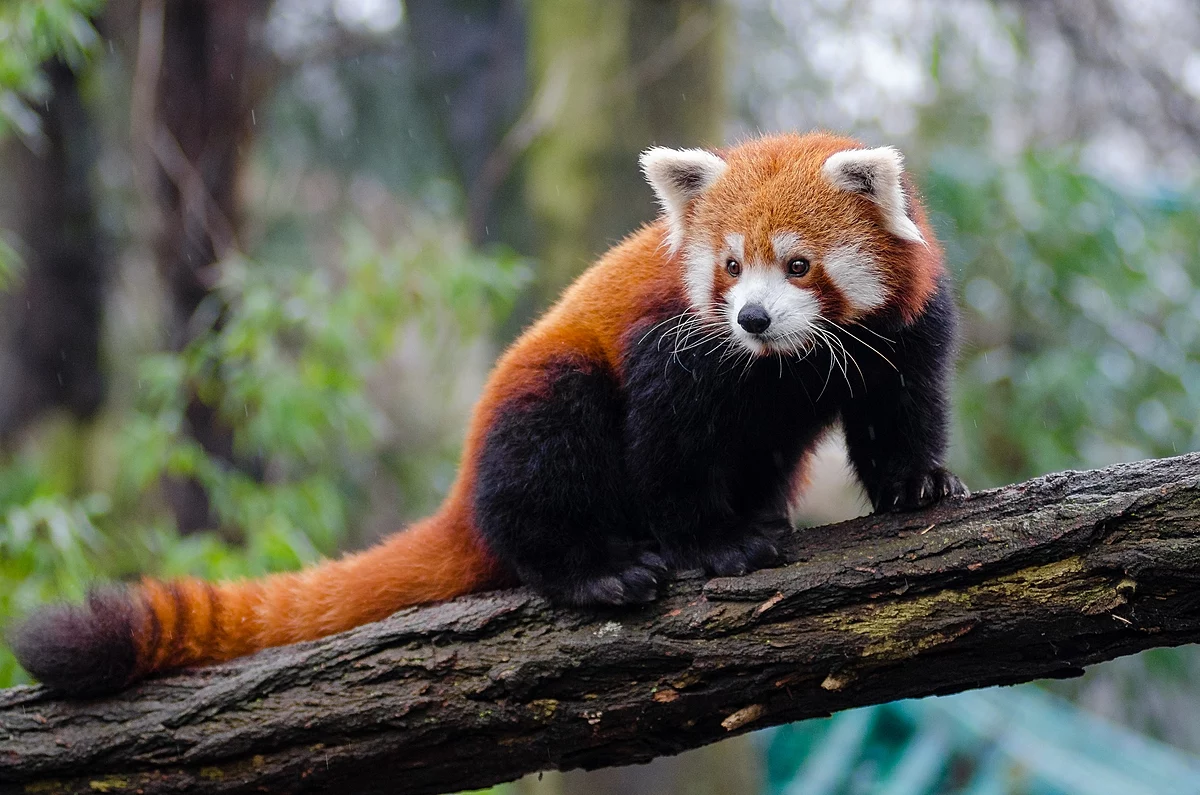
The Red Panda also known as Ailurus fulgens, is a small mammal native to the Eastern Himalayas and Southwestern China. It has reddish-brown fur with a black belly and legs, white-lined ears, a white muzzle and ringed tail. Contrary to its name, the Red Panda is more closesly affiliated with raccoons, weasels, and skunks. It is not closely related to the Giant Panda which is a bear although both have elongated wrist bones used for grabbing bamboo. They weigh between 7 and 33 pounds and 20 to 25 inches in length with a 11 to 19 inch tail that they use for balance and warmth. Their status is endangered as there are less than 10,000 red pandas worldwide due to deforestation and hunting. You can see them in the Bronx and Central Park Zoo.

Red Panda

Red Panda


Animal Fun Facts
The Giant Panda The Giant Panda's jaws have the bite strength similar to that of a lion and the Kung Fu Panda "Po Ping" belongs to this species.
The Red Panda Red Pandas can make a variety of sounds but perhaps the most surprising are the tweeting sounds and quacks like a duck's.