There are 6 whale species that are endangered or at risk of being endangered in New York State.
These species are the Sperm Whale, Sei Whale, Blue Whale, Finback Whale, Humpback Whale, and Right Whale.
This is the Sperm Whale also known by its scientific name: Physeter catodon. It can be seen in New York waters during Spring and early Summer. Adult males can weigh up to 90,000 lbs and adult females can weigh up to 31,000 lbs. They can grow up to 52 ft and live for approximately 70 years. Sperm whales look immensely different from any other whale, donning an enormous rectangle-shaped head and a jaw of up to 52 cone-shaped teeth weighing a kilo each. The population of sperm whales decreased from 1.1 million to 300,000 as a result of whaling, mainly for commercial reasons such as using the spermaceti found in their head cavities for oil lamps and candles. Now, whaling is not as common but small-scale whaling still exists off the shores of Long-Island (since the 1640s).
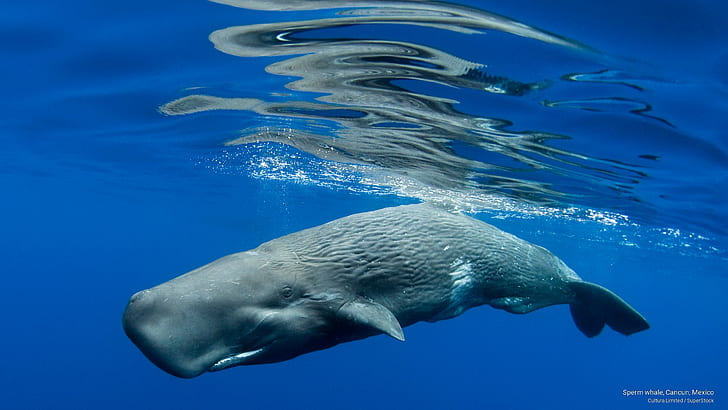
Sperm Whale
Sei Whale
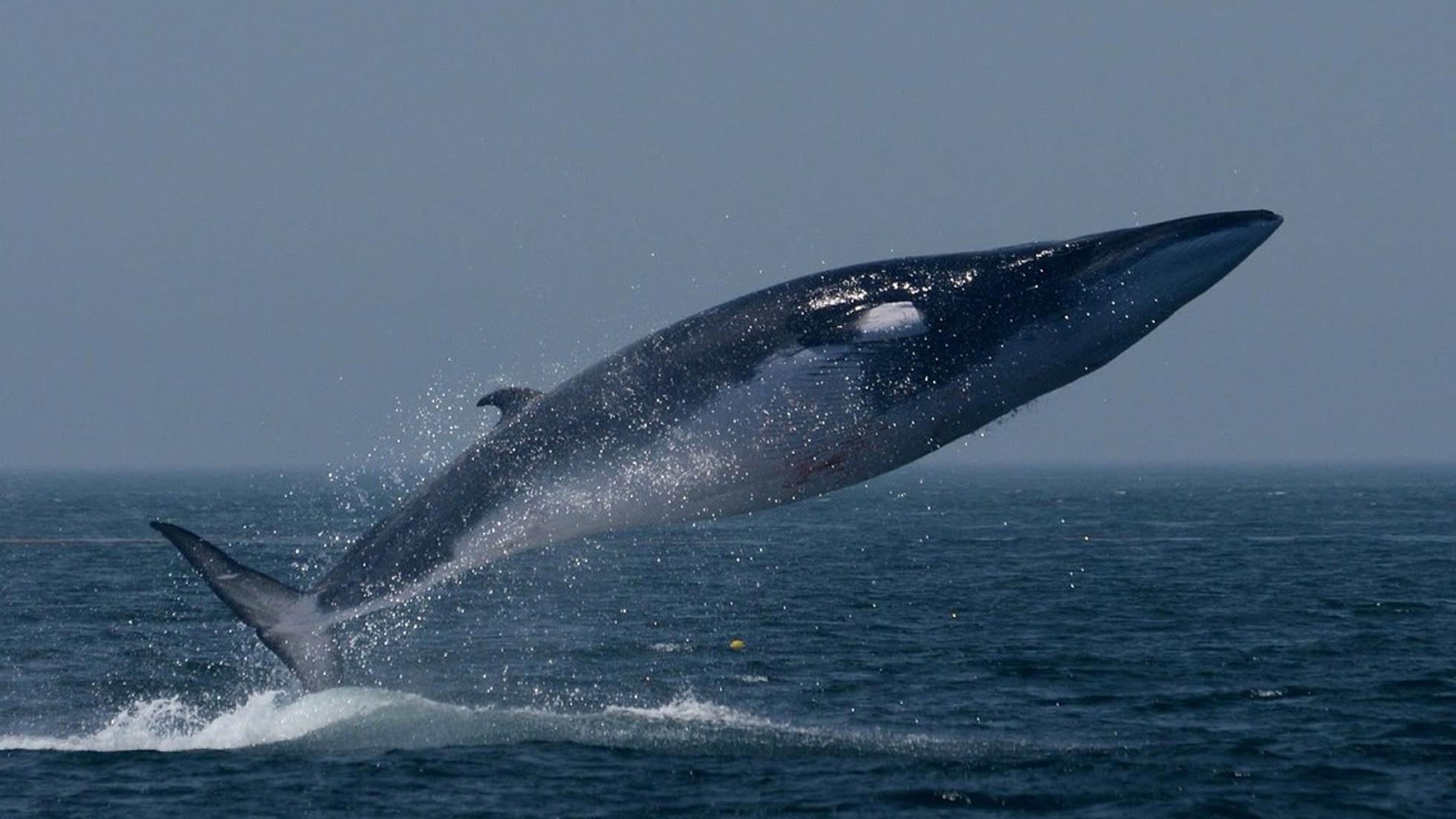
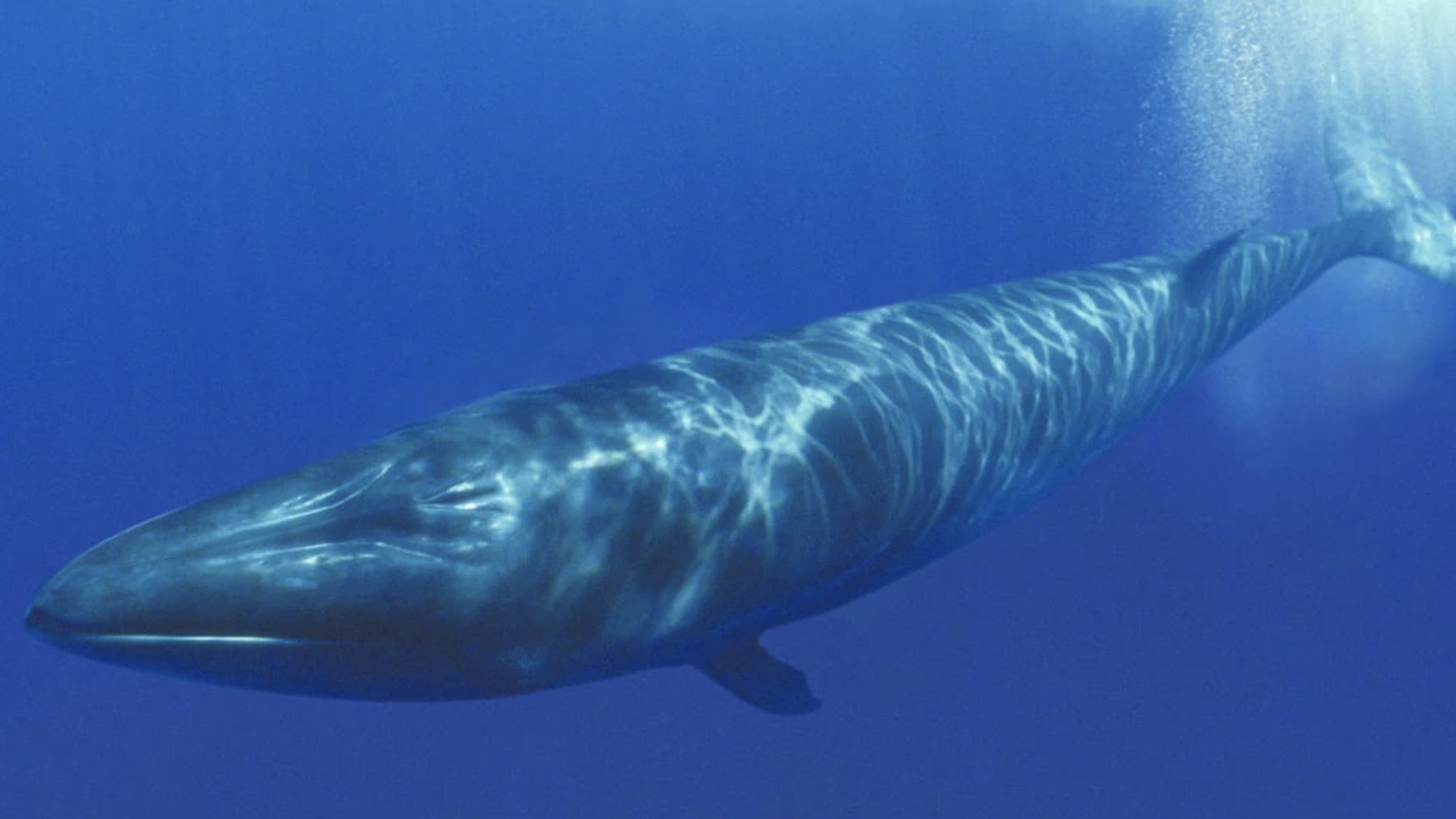
The Sei Whale, also known as Balaenoptera borealis, is one of the least studied species of whales. Sei whales have long sleek bodies that are bluish-gray to black in color. They have a distinct ridge that runs from the nose to their two blowholes. Female sei whales are the bigger of the two sexes and can grow up to 19.5 meters, over 2 meters larger than their male counterparts. Sei whales dive differently from any other whale by leaving the water at a low angle and landing with a belly flop. Approximately 300,000 Sei whales have been killed for their meat and oil. When the numbers of blue and fin whales was depleted, many turned to Sei whales for commercial whaling and this specie in particular is subject to scientific whaling. They can be found offshore of New York near the shelf break and can occasionally be found in shore.
This is the Balaenoptera musculus, better known as the Blue Whale. They are the largest animals ever to live on our planet and can grow to over 33 meters long. Female blue whales weigh around 190,000kg whereas male blue whales only weigh around 150,000kg. Blue whales can feed on as many as 40 million krill daily which they sieve through the water using their baleen. The world population of blue whales is merely 10,000-25,0000 due to commercial whaling. Many people hunted them for their large size and blubber which was sold to suppliers who would then make from it lamp oil, candles, and etc. It is believed that blue whales use the New York Bight to migrate from summer feeding areas to winter breeding grounds.
Blue Whale
Finback Whale
The Finback Whale (Fin Whale for short) is known as Balaenoptera physalus and dons multiple nicknames such as the "greyhounds of the sea" or "razorbacks." They are the second largest whale and can grow up to 85 feet weighing up to 60 tons. They can live up to 90 years and consume up to 4,000 pounds of krill, small schooling fish, and squid per day. The left side of a fin whale's lower jaw is black while the right side is white with the difference in color known as "asymmetrical pigmentation" and are only found amongst 2 whale species: The Finback Whale and Omura's Whale. Their population has also been severely decimated by whaling for their oil, meat, and baleen, though they used to be too fast to be caught by whale boats as they could swim up to 23 miles an hour. They are severely endangered but many still continue to relentlessly hunt them. Fin whales are the most abundant large whale species in New York and can be seen close to the shore.
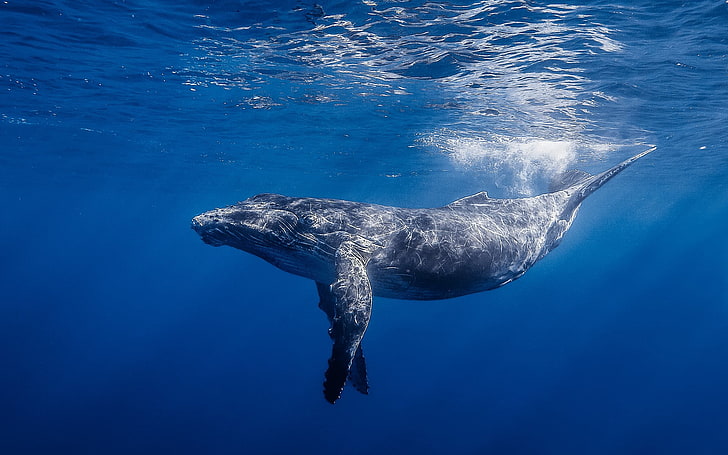
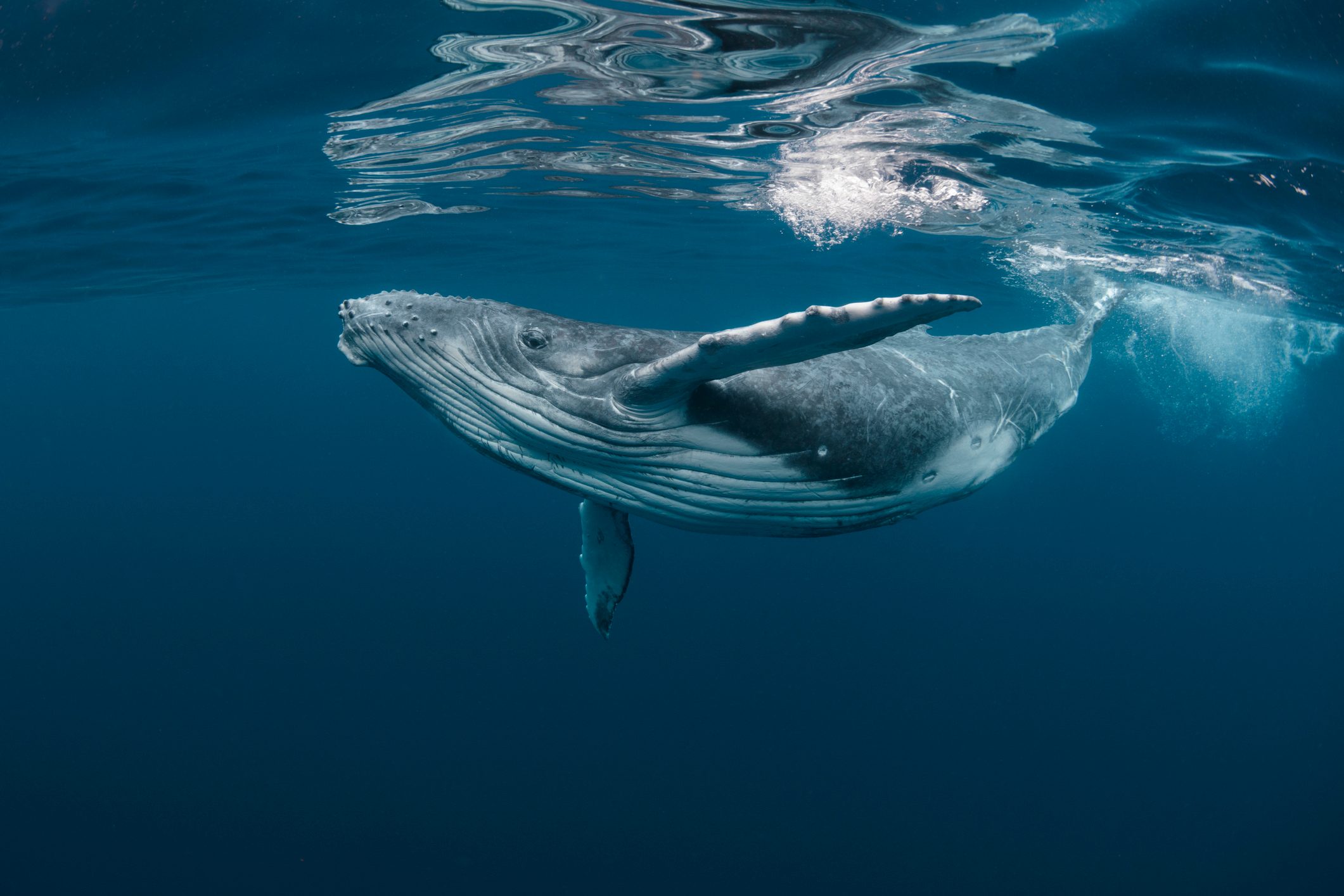
This is the Megaptera novaeangliae, better known as the Humpback Whale, named after the distint hump on their back. They can grow up to 17 meters and weigh up to 36,000 kg. They have enormous pectoral flippers that can grow up to a third of their body length, which they use to slap the water to hunt and swim. Their identifying feature is their giant tail and the markings on the undersides of their tail can be used by scientists to identify individual humpbacks. Humpback whales embark on long voyages throughout the year and make the longest migrations of any whale. They feed in the Northern Hemispehere in cold waters and migrate South for breeding in warm waters. In 1985, whaling severely reduced the population of Humpback whales by more than 95% however the species is increasing in abundance. Humpback whales are commonly seen in New York close to shore during the summer and fall but they can also be seen far offshore.
Humpback Whale
Right Whale
The Finback Whale (or North Atlantic Right Whale) is known as Eubalaena glacialis. They can grow up to 50 feet long and weigh up to 70 tons. They received their name because they were considered the "right" whale to hunt. They consume about 3,500 pounds of copepods per day with baleen plates that are 8 feet long. They have black bodies with no dorsal fins and their blow spouts are shaped like a "V". Their bellies have irregularly shaped white patches and their heads have knobby patches of dry skin called callosities. Each whale has unique patterns of callosities that scientists use to identify each individual one. Right whales are critically endangered with an estimate of only 400 left in the whole world. Majority of right whale sightings in New York are within 50 miles of the shore.
| Animal | Fun Facts |
|---|---|
| The Sperm Whale | Sperm whales have the largest brains in the world of any modern or extinct animal, on average weighing between 14 to 17 pounds with a volume of about 8,000 cubic centimeters. |
| The Sei Whale | Sei Whales are extremely fast swimmers but tire out very quickly like cheetahs. |
| The Blue Whale | Blue whales are so big that their tongues can weigh as much as an elephant and their hearts can weigh as much as an automobile. |
| The Finback Whale | Fin whales often mix with other whale species and have been known to breed with blue whales, giving birth to hybrid calves. |
| The Humpback Whale | Male humpback whales create and sing songs that can be heard up to 20 miles away. |
| The Right Whale | The earwax of right whales can be used to determine their age. |